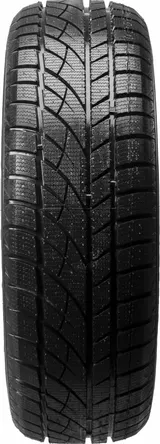
Head to head · Winter Tyres
CEAT Winterdrive vs Radar Dimax Winter
Winter Tyres head to head
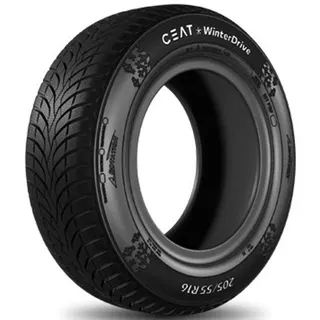
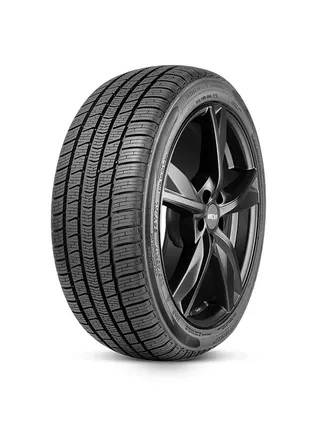
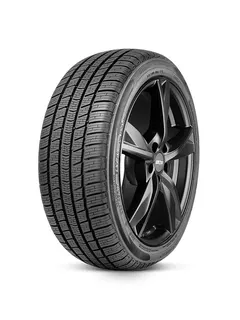
Both tread patterns side by side, with every figure we have for both: Jury Score, the EU tyre label in every size both are made in, and the magazine tests in which both took part. At the end you can see which tyre suits whom.
28 shared sizes4 shared testsTyreJury · as of 29/11/2026
The verdict in words
Overall, a draw: 3 points for CEAT Winterdrive, 2 for Radar Dimax Winter, 1 level. Decide by what matters most to you.
- Jury Score: CEAT Winterdrive is ahead (5.4 to 4.7).
- Shared tests: CEAT Winterdrive finished ahead in 3 of 3 comparable tests, Radar Dimax Winter in 0.
- Wet grip: Radar Dimax Winter has the better class in 25 of 28 shared sizes, CEAT Winterdrive in 0.
- Fuel efficiency: Radar Dimax Winter has the better class in 9 of 28 shared sizes, CEAT Winterdrive in 1.
- Rolling noise: in the shared sizes CEAT Winterdrive is 1.6 dB quieter on average (69.9 to 71.6 dB).
- Winter: both carry the 3PMSF snowflake symbol in the shared sizes.
- Weight: CEAT Winterdrive is lighter on average (8.93 kg to 10.94 kg) – a measured value, not a sign of quality.
Which tyre suits whom?
- If you often drive in the rain
- Radar Dimax Winter
- If fuel use and range matter to you
- Radar Dimax Winter
- If you like it quiet
- CEAT Winterdrive
- If you often drive on snow in winter
- both level
- If you rely on magazine tests
- CEAT Winterdrive
Only values we have for both. A point counts only with a clear gap (for example 1 dB, 0.3 Jury points or a fifth of the shared sizes); otherwise it counts as level.
Jury Score
Jury Score of both tread patterns
The pattern score is the median over all sizes of the pattern; the range runs from the weakest to the strongest size.
Rating by TyreJury, calculated using our published method.
What does this mean?
Rating by TyreJury, calculated using our published method.
What does this mean?
4 shared tests
CEAT Winterdrive and Radar Dimax Winter in the same test
Full tests by magazines and motoring clubs in which both tread patterns took part – with issue and tested size. Ranking and score are shown exactly as the magazine printed them.
- ADAC 09/2025Tested size: 225/40 R18CEAT WinterdriveGrade 2.8, satisfactoryRanked 10 of 31 · score 2.8 (satisfactory)aheadRadar Dimax WinterGrade 4.6, poorRanked 21 of 31 · score 4.6 (poor)
- ADAC 09/2025CEAT Winterdrivesatisfactory 2.8Radar Dimax Winterpoor 4.6
- ADAC 09/2025Tested size: 225/40 R18CEAT WinterdriveGrade 2.8, satisfactoryRanked 10 of 31 · score 2.8 (satisfactory)aheadRadar Dimax WinterGrade 4.6, poorRanked 21 of 31 · score 4.6 (poor)
- ÖAMTC 10/2025Tested size: 225/40 R18CEAT WinterdriveGrade 2.8, satisfactoryRanked 10 of 31 · score 2.8 (satisfactory)aheadRadar Dimax WinterGrade 4.6, insufficientRanked 21 of 31 · score 4.6 (poor)
Most tests come from German-language magazines and motoring clubs; grades follow the German school scale (1 = best).
28 shared sizes
EU tyre label in the shared sizes
For each size, the standard version of both tread patterns (without XL and run-flat where available). The better value of each row is highlighted.
Wet grip
Class A to E on the EU tyre label for braking on wet roads. According to ADAC, a car on A-rated tyres can stop up to 18 m shorter from 80 km/h (50 mph) than on E-rated tyres.
Fuel efficiency
Class A to E on the EU tyre label, based on the rolling resistance coefficient. According to ADAC, the difference in fuel consumption between A and E is about 0.5 l/100 km, roughly 7.5 %.
Rolling noise
Pass-by noise in dB(A) stated on the EU tyre label, with class A, B or C. A means at least 3 dB below the limit value, C means above it.
| Size | CEAT Winterdrive | Radar Dimax Winter | ||||
|---|---|---|---|---|---|---|
| Wet | Fuel | Noise | Wet | Fuel | Noise | |
| 205/55 R16 | C | C | 70 | B | C | 72 |
| 195/65 R15 | C | C | 69 | B | C | 72 |
| 215/65 R16 | C | D | 70 | B | C | 72 |
| 205/60 R16 | C | C | 70 | B | C | 72 |
| 225/45 R17 | C | D | 70 | A | D | 70 |
| 185/65 R15 | C | C | 70 | B | C | 71 |
| 215/60 R16 | C | C | 70 | B | C | 72 |
| 225/55 R17 | C | C | 70 | B | C | 72 |
| 225/50 R17 | C | D | 70 | A | C | 72 |
| 175/65 R14 | C | D | 70 | B | D | 71 |
| 215/60 R17 | C | C | 70 | B | C | 72 |
| 195/55 R16 | C | C | 70 | B | D | 72 |
All 28 shared sizes
| Size | CEAT Winterdrive | Radar Dimax Winter | ||||
|---|---|---|---|---|---|---|
| Wet | Fuel | Noise | Wet | Fuel | Noise | |
| 215/55 R17 | C | C | 70 | B | C | 72 |
| 225/40 R18 | C | D | 70 | B | C | 72 |
| 215/55 R16 | C | C | 70 | B | C | 72 |
| 185/60 R15 | C | C | 70 | B | C | 71 |
| 205/50 R17 | C | D | 70 | B | C | 72 |
| 175/70 R14 | C | C | 70 | B | C | 71 |
| 195/60 R15 | C | C | 69 | B | C | 72 |
| 165/70 R14 | C | D | 70 | C | D | 71 |
| 215/50 R17 | C | D | 70 | B | C | 72 |
| 185/55 R15 | C | D | 70 | B | C | 71 |
| 175/65 R15 | C | D | 70 | C | D | 71 |
| 185/65 R14 | C | C | 70 | B | C | 71 |
| 195/50 R15 | C | D | 69 | B | C | 72 |
| 185/60 R14 | C | D | 70 | B | C | 71 |
| 215/65 R17 | C | D | 71 | B | C | 72 |
| 165/65 R14 | C | D | 70 | C | D | 71 |
Distribution of classes in the shared sizes
How often each tread pattern has which class in the shared sizes (A is the best).
Sizes and markings
Size range, markings and weight
A size counts for a marking if at least one version carries it.
| Size range, markings and weight | CEAT Winterdrive | Radar Dimax Winter |
|---|---|---|
| Sizes | 38 | 73 |
| Inches | 13–18 | 14–21 |
| Shared sizes | 28 | 28 |
| Only in this tread pattern | 10 | 45 |
XL (reinforced)Marking for reinforced tyres (UN Regulation No. 30), shown as ‘XL’, ‘Extra Load’ or ‘Reinforced’. Their higher load capacity only applies at a higher inflation pressure; ADAC gives the example of 2.9 instead of 2.5 bar (about 42 instead of 36 psi). | 17 of 38 | 68 of 73 |
Run-flatTyres that can still be driven for at least 80 km at 80 km/h (about 50 miles at 50 mph) without air pressure (UN Regulation No. 30). You can recognise them by the ‘F’ before the rim diameter (RF), the run-flat symbol or manufacturer codes such as RFT (Bridgestone), SSR (Continental) or ROF (Goodyear). The MOT manual allows run flat and conventional tyres on the same axle but says this is ‘not recommended’; more in Run flat tyres explained. | 0 of 38 | 0 of 73 |
3PMSF snowflake symbolPictogram of a three-peaked mountain with a snowflake, also known as the Alpine symbol. It may only appear on tyres that have passed the snow test under UN Regulation No. 117. As there is no winter tyre requirement in the UK, the symbol has no legal significance for driving here, but it does show proven snow grip. More in M+S and 3PMSF symbols. | 38 of 38 | 73 of 73 |
| For electric cars (EV) | 0 of 38 | 0 of 73 |
Original equipment (OE)Codes on the sidewall showing approval by a vehicle manufacturer, e.g. ★ for BMW or MO for Mercedes-Benz. According to Continental they are not a legal requirement but are recommended. More in OE tyre markings. | – | – |
| Weight (median of the shared sizes) | 8.93 kg | 10.94 kg |
| Avg. test score | 2.8 | 4.6 |
| Full tests | 6 | 4 |
| Test wins since 2021 | 0 | 0 |
Example products
Both in the same size
The most popular shared sizes with a photo – both tread patterns side by side in each size, with EU tyre label and test score.


More comparisons